
Choose products designed for your skin type.Everybody’s skin is different, so don’t just buy whatever your sister or your best friend is using—make sure the products you use are tailored to you. One way to tell what type of skin you have is to wash your face thoroughly with a gentle cleanser. Wait two hours, then check out your skin. If your face looks and feels:
- Smooth, oil-free, with no flakiness—you probably have normal skin.
- Shiny or slick—you likely have oily skin
- Tight, dull, patchy, or flaky—your skin is probably dry.
- Oily around your forehead nose, and chin, but normal or dry elsewhere—you probably have combination skin. You may need to use separate products on the different zones of your face to get the targeted treatment you need.
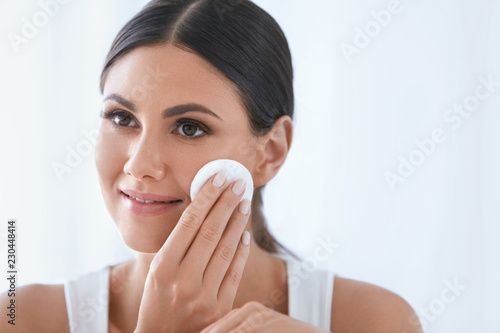
Take off your makeup every night, if you wear it. It might not seem like that big of a deal to crash with your makeup still on, but it can actually lead to clogged pores and breakouts. Every time you wear makeup, use makeup remover or micellar water on a cotton pad to remove every trace.
- Don’t leave on any eye makeup, either—it can irritate your eyes and lead to infections.
- Avoid relying on makeup remover wipes to take your makeup off at the end of the day. They’re convenient, but they aren’t super effective, so you usually end up scrubbing at your skin. That can lead to skin irritation and over time, it may cause your skin to age faster.

Wash your face with a cleanser for your skin type. It’s really important to wash your face with warm water and a gentle cleanser every single night. That will remove dirt, bacteria, and oil that’s built up on your skin throughout the day. You’ll also need to wash off your sunscreen—you’re wearing it every day to protect your skin from UV rays, right? All that stuff can lead to breakouts if you don’t wash it away.
- No matter what skin type you have, look for a non-comedogenic cleanser, which means it won’t clog your pores.
- If your skin is normal or if it tends to be sensitive, stick to a mild, lightweight facial cleanser. You don’t need anything fancy!
- Use a creamy or gel-based cleanser if you have dry skin. Avoid foaming cleansers and anything with a strong fragrance.
- Opt for a foaming cleanser if you have oily skin. That will help break up any oil and clean out your pores.
- If you’re prone to breakouts and you want to limit how many products you use, try a cleanser with the acne-fighting ingredient salicylic-acid. However, do not use any other acne treatments unless your dermatologist directs you to.

Don’t pop your pimples if you have them. If your new nighttime routine has you spending extra time in the mirror focusing on your skin, you might be especially tempted to squeeze any pimples you might see. Do your best to resist that urge! Popping pimples can push the infection deeper into your skin, which can make the inflammation a lot worse in the long run.
- Use a spot treatment to help the pimple heal on its own. However, if you need to speed up the healing process or you’re dealing with a major breakout, see your dermatologist for an extraction.
- Don’t pick at blackheads, either—it can lead to inflammation and scarring. Try using a face wash with glycolic acid or salicylic acid to get rid of them, instead.
- To help prevent breakouts, keep your skin clean and moisturized, and try not to touch your face throughout the day, since the oils and bacteria on your hands can cause breakout

Treat yourself to a face mask about once a week. Face masks are an indulgent way to hydrate and nourish your skin, but they aren’t meant to be used every day. Try making them a part of your weekend routine, or use them to perk up your Tuesdays if you want! Put on the mask after you wash your face, but before you put on any other products.
- The directions will vary depending on the mask you choose—some are supposed to dry on your face to draw out impurities, while others should be washed off after only a few minutes so they don’t dry out your skin.
- Buy a face mask that’s made for your particular skin type, or make your own by mixing up some nourishing ingredients from your kitchen. For instance, you can hydrate dry skin by mashing up 1 avocado and mixing it with 1 tbsp (15 ml) of honey and a handful of oats.
- If you’re having an acne breakout, avoid using a mask, as this could irritate your skin even more.

Exfoliate your skin about once a week. Dead skin cells can build up on the surface of your skin, giving your face a dull texture.Swipe on a gentle chemical exfoliant once a week to help dissolve these skin cells, leaving your skin glowing and bright.
- Chemical exfoliants might sound scary, but they’re actually a lot gentler than harsh scrubs. You should definitely never use a scrub if you’re struggling with acne—it will make the inflammation worse.
- Looking for a budget-friendly option? Use an acne-fighting pad that contains salicylic acid—also known as the chemical exfoliant BHA. Just run the pad lightly over your face, then let your face dry completely. Remember to moisturize after you’re done!


Leave a Reply